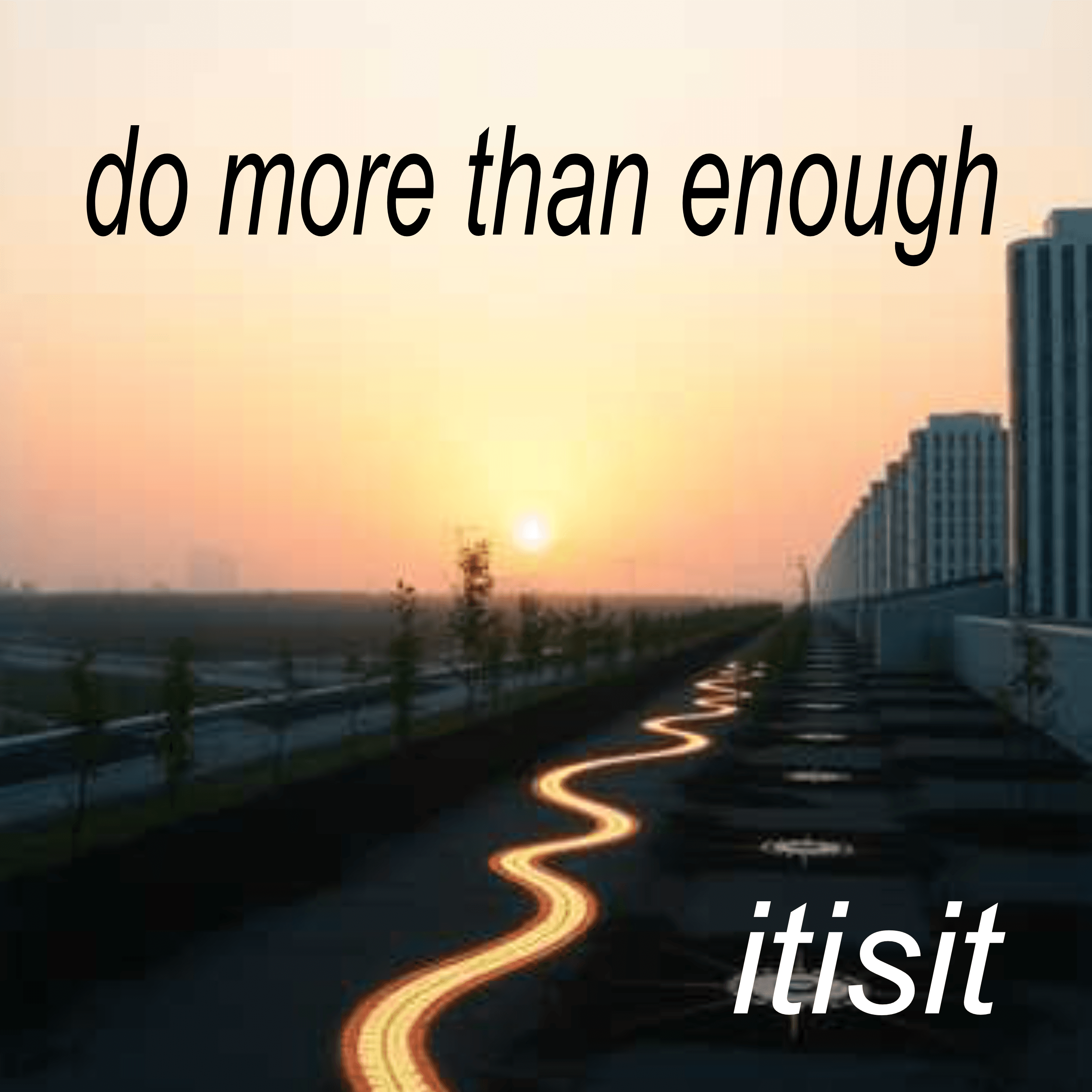
Ecosystem: The Unfairness
Do More Than Enough
A hopeful call for capable people to act now and reduce the burdens inherited by future generations.


On Saturday morning, you notice the overflowing recycling bin, the unopened email from the local volunteer group and the news alert about another problem that seems far too large for one person. You care. You really do. But you are tired, the week has already taken enough from you, and every possible response feels laughably small.
So you make coffee and promise yourself you will do something when you have more time, more money or a better plan.
That moment is familiar because the world keeps presenting us with problems at a scale no ordinary person can hold. Climate anxiety, struggling neighbours, unsafe workplaces, exhausted schools, family pressures: the list is long enough to make concern feel useless. But the choice is not between fixing everything and doing nothing. That false choice is one of the most effective excuses we have.
You do not have to fix everything. You do have to decide what is yours to do.
Overwhelm often begins with a reasonable thought: "What difference will my small action make?" One reusable cup will not clean an ocean. One conversation will not repair a workplace culture. One hour of help will not solve loneliness in a community.
All true. And still incomplete.
Imagine a parent at the dinner table who worries about the future their children will inherit. They read, talk and worry, but every action seems symbolic beside the size of the threat. Their children do not need a parent who can repair the planet alone. They need to see an adult who refuses to let imperfection become permission to withdraw.
The same pattern appears at work. Everyone knows a colleague is being spoken over in meetings. Each person waits for the manager to intervene. The manager assumes someone will raise it privately. Silence spreads, not because nobody cares, but because responsibility has been diluted across the room.
When responsibility belongs to everyone in theory, it can belong to no one in practice.
Not everyone has the same capacity. Someone surviving week to week cannot be asked to carry the same load as someone with security, time and influence. Fair responsibility is not equal sacrifice. It begins with an honest assessment of what you can give without pretending your comfort is a constraint.
Your share might be money, but it might also be attention, a vote, a changed habit, a difficult conversation or one dependable hour each month. It might mean questioning a convenient purchase, mentoring one young person, checking on a neighbour or asking a workplace to measure what it claims to value.
Small does not mean meaningless. Small means specific enough to begin.
This is where hope becomes practical. Hope is not confidence that technology, leaders or some unusually brave stranger will arrive in time. It is the decision to act before certainty appears. Useful hope has a calendar entry. It has a name beside it. It can be seen by another person.
The best first step is rarely the most dramatic one. It is the one you can repeat.
Choose one concern instead of carrying ten. Define one action that fits your real capacity. Attach it to a time, place or person. Then make it social: tell a friend, join an existing group or invite someone to do it with you. Shared action reduces the feeling that you are performing a lonely gesture against an immovable world.
If waste bothers you, do not begin with a vow to live perfectly. Change the next recurring purchase and ask one other household to compare notes. If your community feels disconnected, do not promise to unite the suburb. Learn two neighbours' names and create one regular point of contact. If a workplace practice is unfair, document one example, propose one improvement and find one colleague willing to support it.
The goal is not moral purity. The goal is dependable participation.
There will always be reasons to wait. The perfect solution is not ready. Other people have more power. Your effort might fail. All of that can be true, and action can still be the more honest choice.
We inherit progress the same way we inherit problems: through accumulated decisions made by people who rarely saw the final result. Someone planted the tree whose shade you enjoy. Someone argued for the protection you now take for granted. Someone kept showing up when the outcome was uncertain.
You are not responsible for carrying the future alone. You are responsible for not handing all of it to someone else.
Pick one thing. Make your share visible. Do it again. That is how rising dread becomes grounded hope — and how "not enough" becomes more than enough.
Ecosystem: The Unfairness
A hopeful call for capable people to act now and reduce the burdens inherited by future generations.

Ecosystem: The Doubt
Releasing uncertain outcomes and protecting your peace.
Read Story
Ecosystem: The Doubt
Finding a way forward, one small, manageable action at a time.
Read Story
Ecosystem: The Doubt
Real resilience begins with one ordinary action taken before confidence or motivation returns.
Read Story
Ecosystem: The Doubt
A practical reflection on recovering from setbacks by making the next manageable move.
Read Story
Ecosystem: The Doubt
A practical reflection on beginning again while anxiety is still present: naming what is happening, reducing the next step, and treating steadiness as a practice rather than a condition that must arrive first.
Read Story
Ecosystem: The Doubt
When the future is unclear, one honest and reachable action can restore direction and hope.
Read Story