Ecosystem: The Search
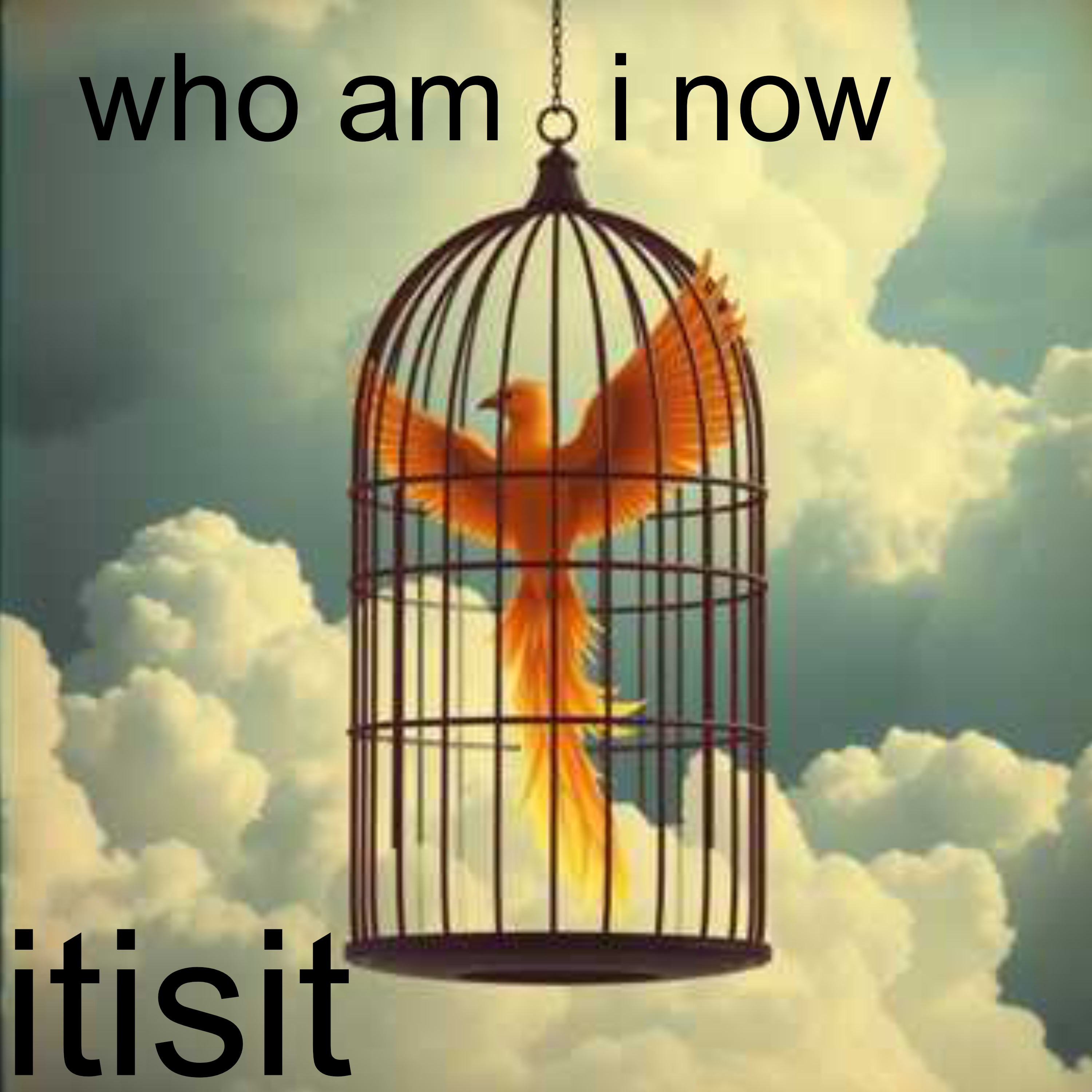
Who Am I Now
A searching song about masculine identity, changing roles and the courage to live more honestly.

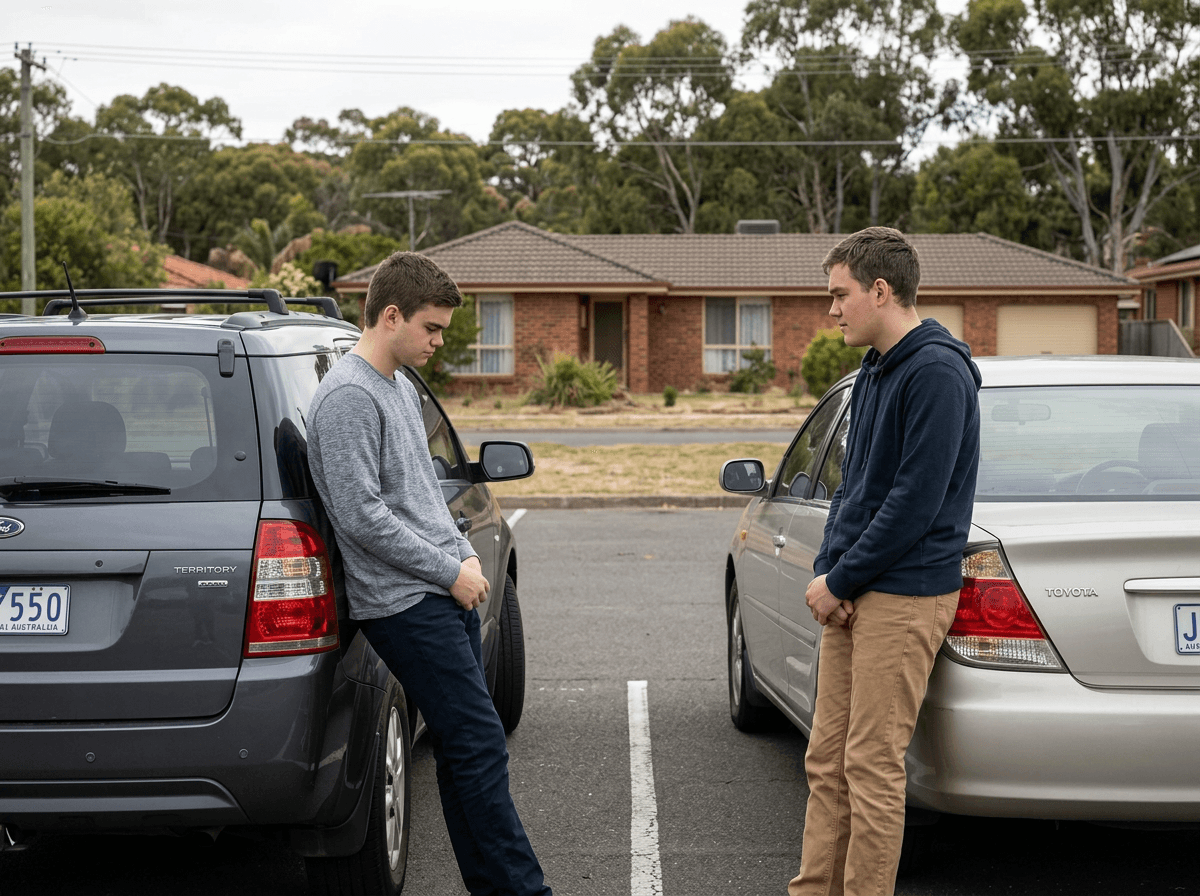
A friend asks how you are, and the answer arrives before you have checked whether it is true: "I'm fine." You say it in the car park after a difficult appointment. You say it at work when sleep has deserted you. You say it at the kitchen bench while your partner can see that something is wrong.
For many men, "I'm fine" is less a report than a reflex. It keeps the conversation moving and protects the image of the person who can handle things. But strength is not proved by hiding every strain. Sometimes the strongest thing you can say is, "I'm not okay."
The habit rarely begins as dishonesty. It may begin with being the reliable one: the father who does not panic, the colleague who fixes the problem, the partner who absorbs pressure and keeps going. Those qualities can be valuable. The trouble begins when a role becomes a rule: I can help, but I cannot need; I can protect, but I cannot be frightened; I can listen, but I cannot say that I am hurting.
Then ordinary moments become performances. A job rejection becomes a joke before disappointment can show. An argument ends with a slammed cupboard and silence because anger feels safer than hurt. A new father lies awake worrying about money, then tells everyone he is simply tired. The armour works for a while. It also makes closeness difficult, because nobody can respond to what they are not allowed to see.
Armour can stop a blow, but it can also stop an embrace.
Admitting that you are struggling does not require announcing every feeling to every person. It is not making someone else responsible for rescuing you. Emotional honesty can be measured, specific and accountable.
It might sound like: "I have been more anxious than I expected, and I need to talk." Or: "When that happened, I felt dismissed. I do not want to turn it into anger." At work, it might be: "I can complete this well, but not by Friday without help." With a friend, it may be only: "I have had a rough week. Could we take a walk?"
Those sentences do not surrender strength. They direct it. They replace guessing with information and distance with a possible next step.
If you have spent years being the composed one, openness can feel unnatural. You may minimise the problem while naming it. You may make a joke, change the subject or immediately reassure the other person that everything is under control. That does not mean you have failed. It means you are learning a form of communication you may never have been encouraged to practise.
Start smaller than the dramatic confession imagined in your head. Name one true thing. Stay in the room after saying it. Let the other person respond without correcting their concern. If they offer a solution when you need listening, say so: "I do not need this fixed yet. I need you to hear me."
Courage is not the absence of discomfort. It is the decision that discomfort will not make every choice for you.
The old picture of strength is often rigid: hold the line, know the answer, remain untouched. Real life asks for something more flexible. A relationship may require you to listen when your pride wants to defend. Parenting may require an apology. Redundancy, illness or retirement may remove the role that once organised your identity. Equality at home may ask you to stop treating care as assistance and start treating it as shared responsibility.
In those moments, adapting is not weakness. A tree that cannot bend is not stronger because it breaks.
You can still be capable, protective and dependable. You can also cry, reconsider, ask, receive and change. These qualities do not cancel one another. They make a person more available to reality and to the people trying to love him.
The next time the automatic answer appears, pause. You do not owe everyone your private life, but you can choose one safe person and offer one accurate sentence. Name the situation, name its effect and make a clear request.
"I am worried about the result. Can I call you after the appointment?" "I have been withdrawing because I feel ashamed about work. Could we talk tonight?" "I am angry, but underneath that I think I am hurt. Give me ten minutes, then I want to continue this conversation."
If distress is persistent, overwhelming or affecting safety, sleep, work or relationships, strength may mean speaking with a qualified professional. Support is not evidence that you have failed to cope. It is one way of taking responsibility for what is happening.
You are more than the function you perform for other people. Provider, protector, partner, father, son, colleague and friend may all matter, but none has to become a cage. Identity can move as life moves. Strength can include steadiness and softness, conviction and curiosity, independence and connection.
The goal is not to throw away the armour in every room. It is to remember that you are the person inside it, and you are allowed to choose when it is no longer helping.
The next time someone asks how you are, you may still say, "Fine." But when it matters, let strength tell the truth.
Ecosystem: The Search
A searching song about masculine identity, changing roles and the courage to live more honestly.
Ecosystem: The Unspoken
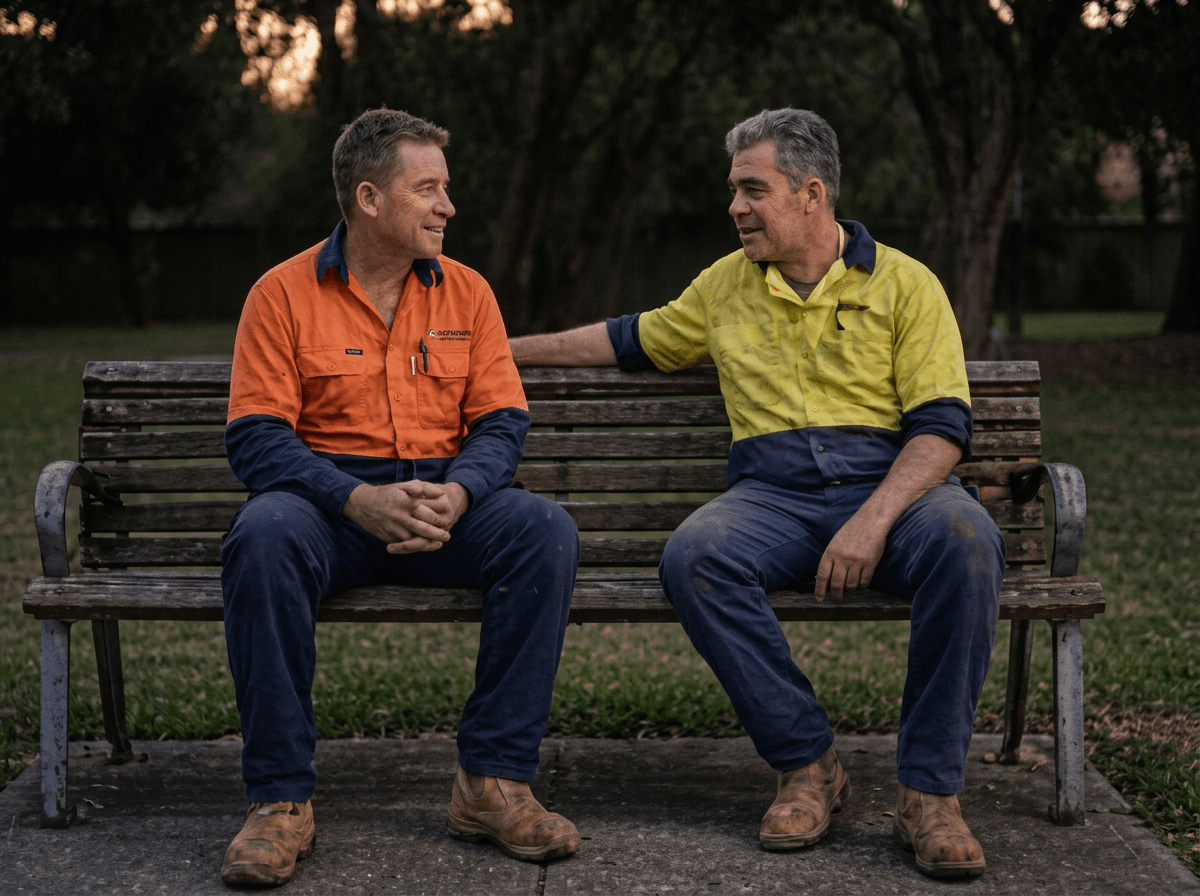
When silence becomes automatic, one honest sentence can reopen connection and make support possible.
Read Story
Ecosystem: The Unspoken
Struggling to put a feeling into words isn't the same as not having one. This piece looks at the gap between feeling something fully and having the practiced vocabulary to say it — and why naming that gap out loud can be enough.
Read Story
Ecosystem: The Unspoken
Mixed feelings can coexist without making you inconsistent, difficult or broken.
Read Story