Ecosystem: The Unspoken
Break the Silence
A compassionate call for men to release hidden pain, reach for support and rediscover hope together.

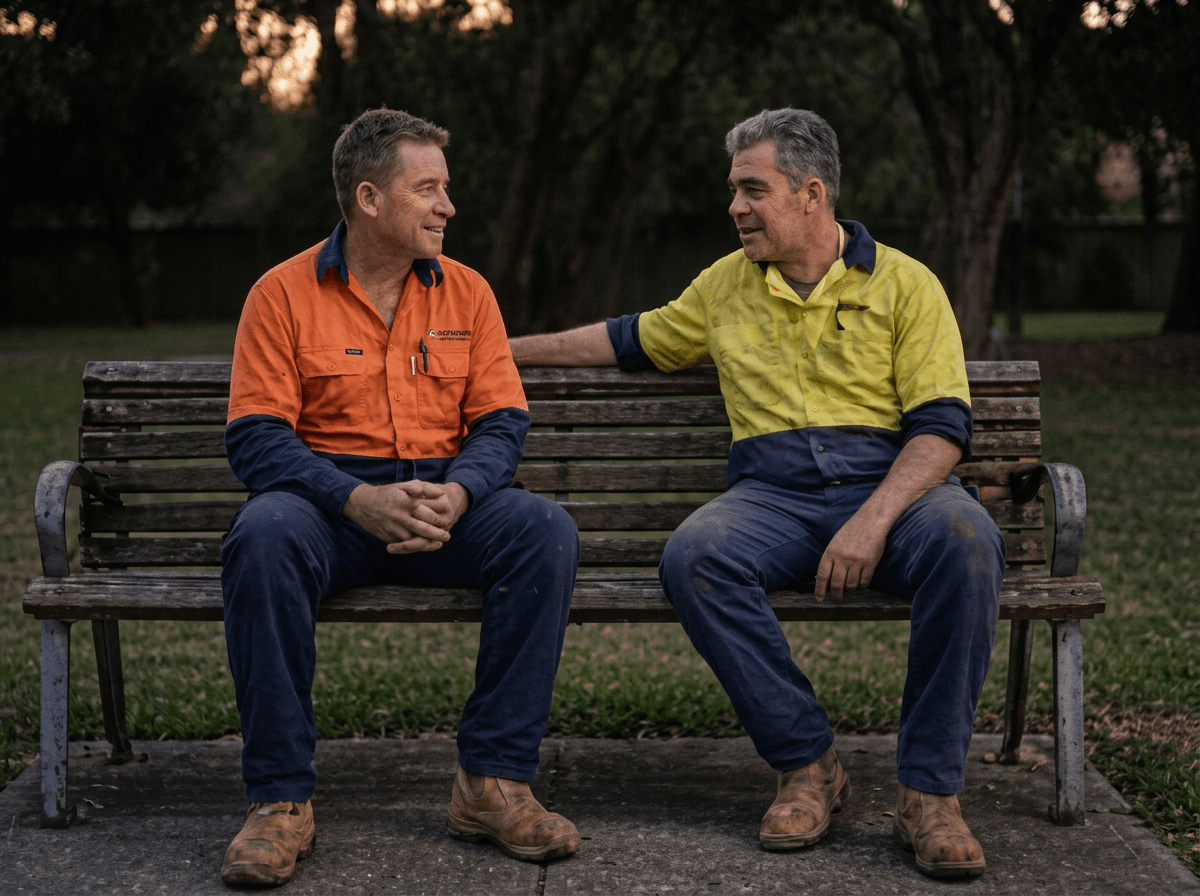
Your friend has cancelled again. At work he still makes the joke, answers every question and says he is only tired. When you ask how he is going, he gives the answer that ends the conversation: ‘I’m fine.’ You recognise the tone because you have used it too.
Sometimes ‘I’m fine’ is true. Sometimes it is a habit built from years of learning that pain should be managed privately. The words arrive before we have decided whether we want to be honest. They protect us from awkwardness, questions and the fear of becoming a burden. They can also leave us alone at the moment we most need company.
Strength is not the ability to hide every struggle. Sometimes strength is the first honest sentence.
Hidden distress does not always look like falling apart. It can look like staying late because going home means being alone with your thoughts. It can sound like the funniest person in the group changing the subject whenever the conversation becomes personal. It can be the father who helps everyone else, then sits in the car for ten quiet minutes before walking inside.
The performance is often rewarded. People call us reliable, calm or low-maintenance. We learn to confuse being easy for others with being safe in ourselves. Eventually, even the people who care about us may not know there is anything to ask about.
Silence rarely announces itself as a decision. It grows through small postponements: not tonight, not at work, not with him, not while the family already has enough to handle.
Many men have been given a narrow script for difficulty: solve it, endure it or keep it out of sight. A problem with out a quick solution can feel like a personal failure. Sadness may emerge as irritation. Fear may become busyness. Loneliness may hide behind the claim that everyone else is busy too.
There is also the fear of what happens after disclosure. Will the other person panic, offer clichés, tell us to toughen up or immediately turn the conversation into a project? If honesty seems likely to cost dignity or control, silence can feel safer.
That is why the first step does not need to be a perfect explanation. ‘I haven’t been myself lately.’ ‘I’m not coping as well as I look.’ ‘Can we talk without trying to fix it straight away?’ A small true sentence is enough to change the direction of the moment.
For the person listening, care begins before advice. You might notice that a friend has withdrawn, stopped doing something he enjoyed, become unusually angry or keeps saying he is exhausted. Ask directly and without drama. If the automatic answer is ‘fine’, make room for another one: ‘You don’t seem like yourself. I’m here if there’s more to it.’
Then resist the urge to fill the silence. Do not compete with a story of your own or rush toward a solution. Listen for what the person is actually saying. You can ask, ‘What has been hardest?’ or‘What would help tonight?’ If the struggle is beyond what friendship can hold, support the next step toward appropriate professional help while staying connected.
You do not need perfect words to be useful. You need steadiness, respect and the willingness to remain after the difficult sentence has been spoken.
Opening up does not mean placing every responsibility on another person. It means allowing the truth to exist between you, where it can be understood and acted on. The next step might be another conversation, an appointment, a walk, a practical change or simply an agreement to check in tomorrow.
Support also works better when it is specific. ‘Call me anytime’ is generous but difficult to use. ‘I’ll ring you after dinner’ or ‘I can come with you’ creates a bridge someone can actually cross. Small follow-through tells the person that their honesty did not frighten you away.
If someone may be in immediate danger, treat it seriously and contact local emergency or crisis support. Caring friendship matters, but it does not have to carry a crisis alone.
The goal is not to make every conversation heavy or turn ordinary sadness into a diagnosis. It is to widen the range of what men are allowed to say. Strong can include uncertain. Capable can include needing help. Courage can sound like ‘I don’t know what to do next, but I don’t want to keep pretending.’
The more often those words are met with respect, the less silence has to protect. Sons hear fathers name emotion without shame. Friends learn that checking in is normal. Workmates discover that reliability and vulnerability can exist in the same person.
The first honest sentence may shake. It may arrive late, after several attempts, or in a message because speaking feels too hard. It still counts. ‘I’m fine’ may have become a habit, but habits can be interrupted.
You do not have to tell everyone everything. Tell one safe person one true thing. Let that be the opening. Strength does not disappear when silence breaks; it finally has somewhere to go.
Ecosystem: The Unspoken
A compassionate call for men to release hidden pain, reach for support and rediscover hope together.

Ecosystem: The Unspoken
Why admitting difficulty can be an act of strength that deepens trust, connection and self-respect.
Read Story
Ecosystem: The Unspoken
Struggling to put a feeling into words isn't the same as not having one. This piece looks at the gap between feeling something fully and having the practiced vocabulary to say it — and why naming that gap out loud can be enough.
Read Story
Ecosystem: The Unspoken
Mixed feelings can coexist without making you inconsistent, difficult or broken.
Read Story